
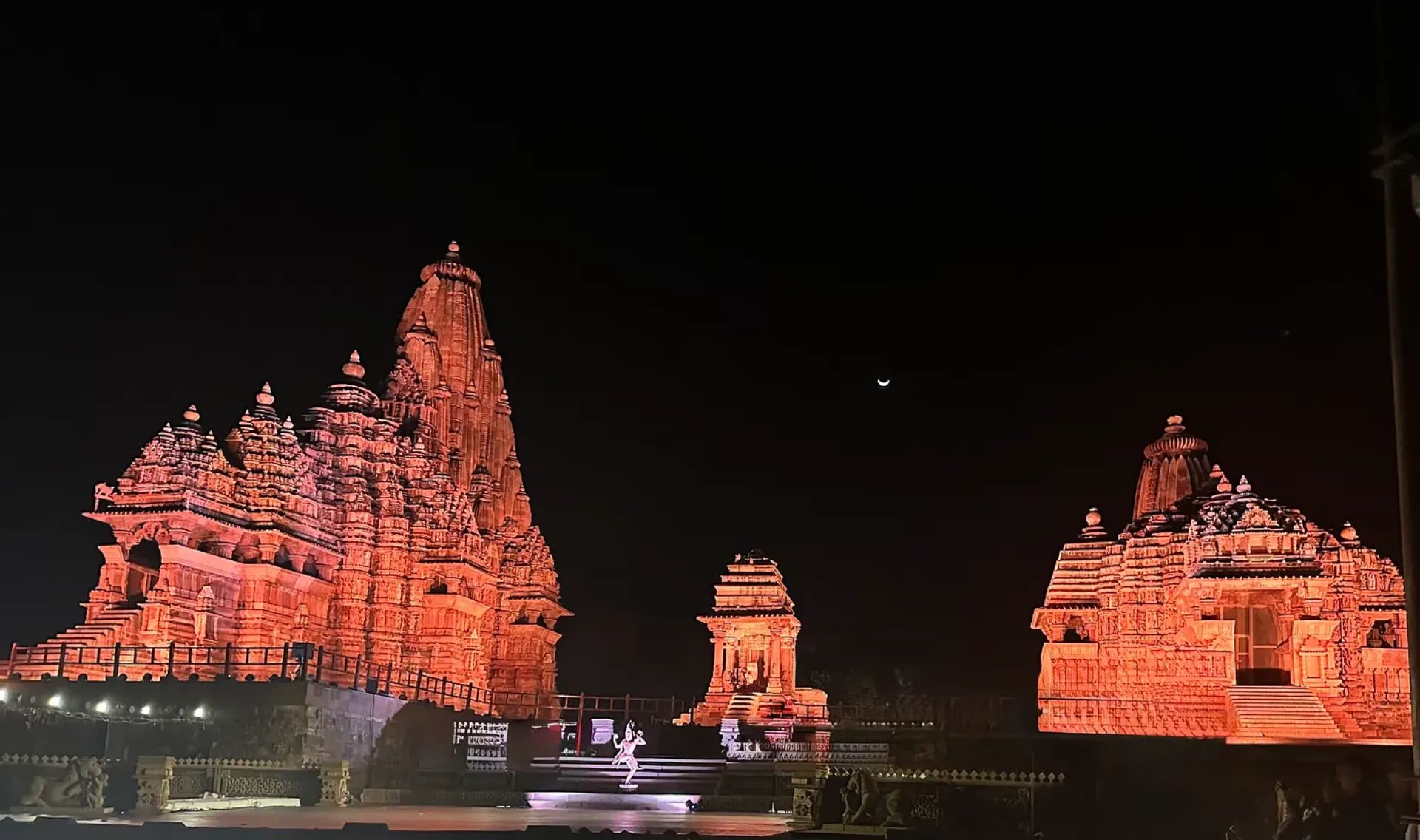
Khajuraho Chronicles is a series of reflections drawn from my time at the 52nd Annual Khajuraho Dance Festival. Across a week-long celebration of Indian arts and crafts, these notes capture performances, histories, and encounters that prompted deeper reflections on what it means to be an artist in a secular age.
Khajuraho, known to medieval India as Khajurvāṭikā, a garden of date palms, evokes dancers poised against the sculptural silhouettes of its temples.
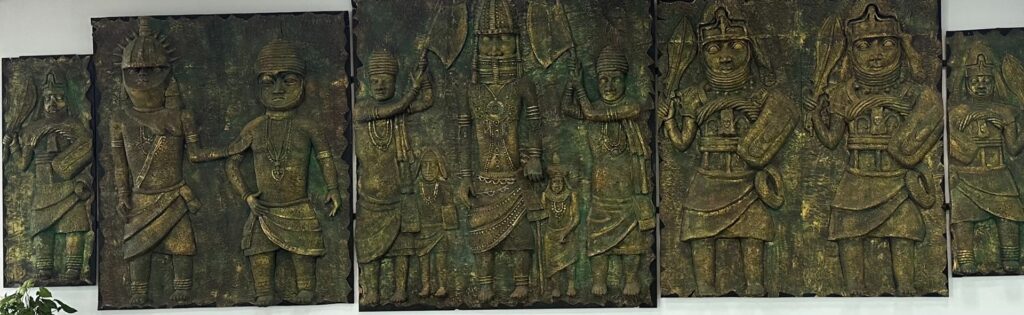
Nothing — I mean nothing — in the mind’s propensity for imagination prepares a visitor for this town. One is welcomed upon arrival at the airport by a stunning sculptural mural — a teaser, a trailer, if you will, of things to come. Even before you reach the temples, the grammar of movement is chiseled in stone.
The 52nd Khajuraho Dance Festival, organized annually by the Madhya Pradesh Kala Parishad, unfolds against the backdrop of the UNESCO recognized Western Group of Temples, built between the 9th and 12th centuries under the Chandela kings. This year’s umbrella theme was Nataraja, the cosmic dancer. Where else could one invoke the Lord of Dance except in a landscape where every wall breathes movement between the sacred and the secular, architecture and sculpture, artisans and patrons?
On the first evening, as we enter the venue, we are welcomed by the beat of drums and dancers in brightly colored mirrored costumes. Sculptors sit chiseling new forms from stone. Painters add finishing touches to canvases. Tents rise steadily in preparation for the craft carnival opening on the second day of the festival. The air feels less like a performance venue and more like a celebration of the dynamic interaction between the arts.
As we walk further, along the long ceremonial pathway leading past the illuminated stone façade of the Chitragupta temple , we arrive at the open air auditorium of the main temple complex.
First-timers like my mother and I with no clue on what to expect ( we had purposely not googled anything about the temple or its history) had to pause to take in the simple grandeur of a temple built by the Chandela kings. The Kandariya Mahadeva Temple, dedicated to Shiva, rises in clustered shikhara-s like a mountain range carved to the left ( facing the stage) the smaller Mahadev temple to the centre and the Devi Jagadambi temple to the right, all three serving as a dramatic backdrop.
Under the evening sky, as light gradually washes the temple façade in amber and gold, one begins to understand something essential: Khajuraho is all about rhythm and synchrony between architecture and sculpture.
The inaugural performances began an hour late. As much as our politicians espouse the importance of culture and the efforts being made by the Government to support the arts, something as simple as showing respect to artists by arriving on time seemed to evade them.
After what felt like an endless wait, with the audience beginning to boo, perhaps compelling speeches to be shortened, the performances finally began.
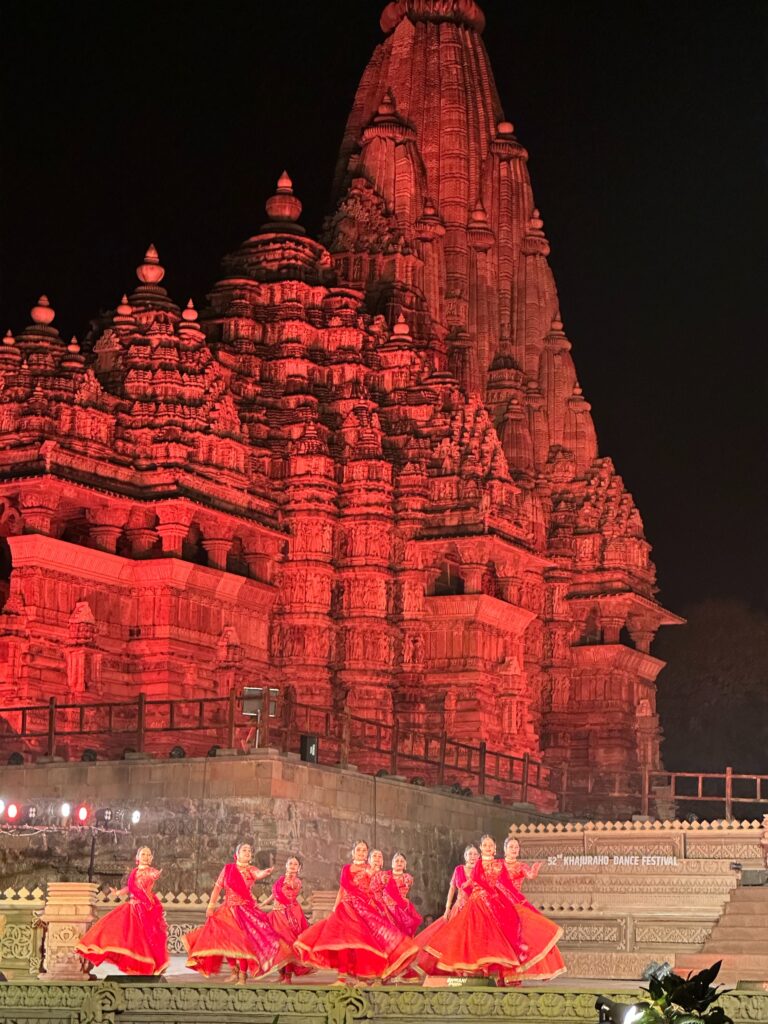
Framed by the illuminated temple, the Kathak dancers, Maithreyee Pahari and her group, dressed in pink and orange, arranged themselves on the steps of the main temple, waving lamps. Against mellifluous chants invoking the Pañca tattva, the sight of dancers holding light before a temple steeped in history and religiosity was breathtaking.
Extremely well curated, the ensemble performed a range from traditional to contemporary, engaging audiences of all kinds — Indian and international, those fluent in the language of dance and those simply there to enjoy the beauty of form. For the duration of the performance chronology collapsed. The 10th-century temple, with all its social, political, and religious history, became immediate, relevant, and alive.
While Bharatanatyam by Anuradha Venkataraman and Odissi by Subhadra Varadkar followed, the early morning flight to Khajuraho and the delayed start to the evening had taken their toll. I carried both aesthetic fullness and physical fatigue back with me.
Day One at Khajuraho, for me, was about entering a site where art and architecture, devotion and aesthetics merged seamlessly. And as I returned to my lodging at Hotel Scala, under a startlingly clear sky, one thought lingered: at Khajuraho, every intricately chiseled surface holds the memory of movement across time.