
The last day of this memorable journey arrived with mixed feelings.
Before leaving Khajuraho, we decided to do some shopping for friends back home. This gave us the opportunity to spend time chatting with the family who run Kuber, a local store. Behind the shop, skilled stone sculptors were at work, patiently carving sandstone into intricate forms.
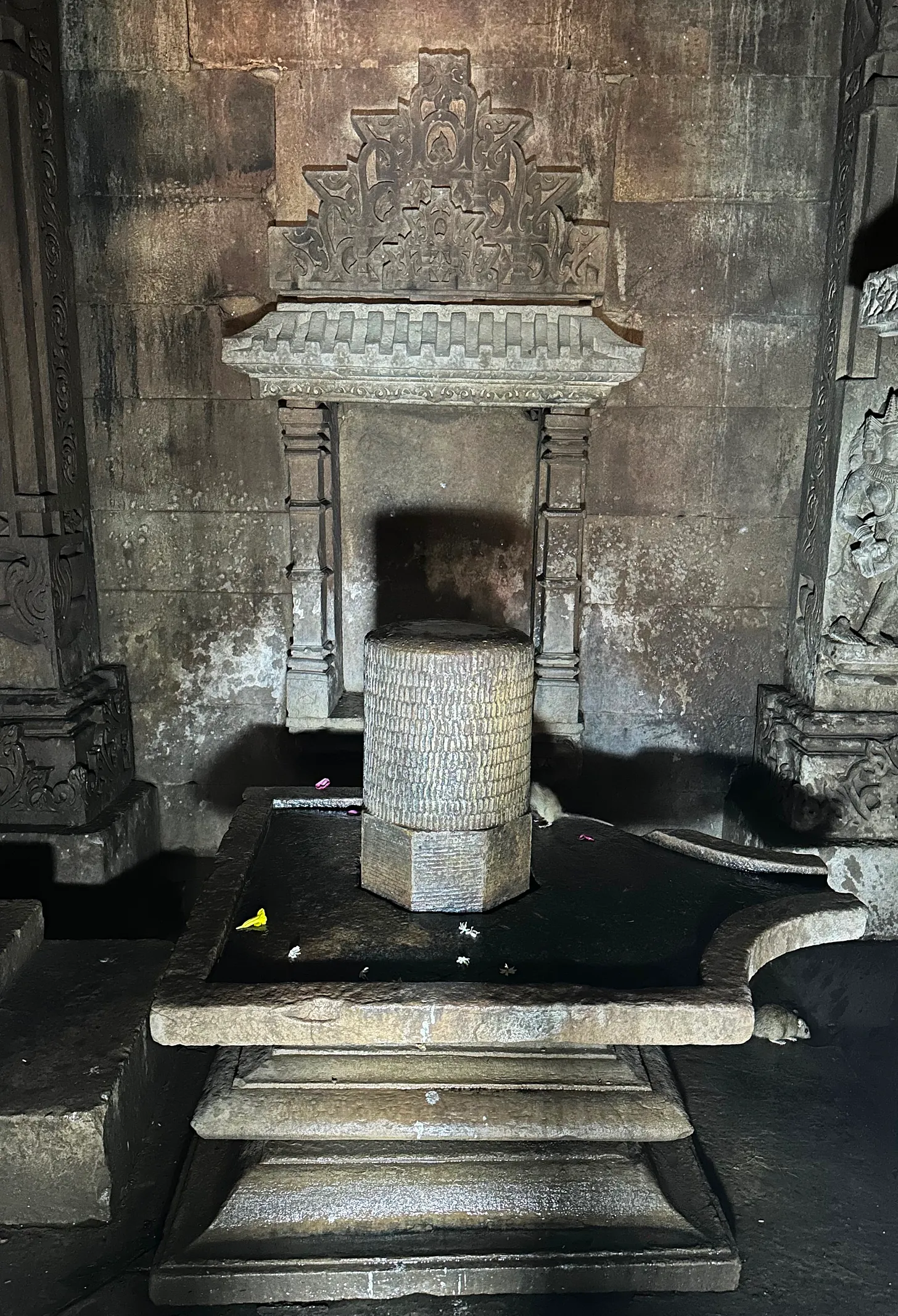
Later in the day we returned to the Southern group of temples to visit the Dulhadev Temple, built around the 11th–12th century. Known as the “bridegroom temple,” Dulhadev is dedicated to Śiva as the divine bridegroom. In the sanctum stands a Śiva liṅga, notable for the delicate carvings of 1,101 miniature liṅgas etched across its surface—an extraordinary sculptural detail that reflects the continuing refinement of temple artistry even in the later stages of the Chandela period.
The temples of the Southern group, particularly Dulhadev and the nearby Chaturbhuja temple, belong to the declining phase of Chandela rule. Yet they reveal two distinct responses to that moment in history. The Chaturbhuja temple, dedicated to Viṣṇu, is striking in its simplicity: its walls are relatively plain, devoid of the elaborate sculptural programs and erotic imagery that characterize the temples of the Western complex. Dulhadev, by contrast, continues the decorative vocabulary of earlier Khajuraho temples, its walls filled with celestial figures and sculptural ornamentation—though the workmanship suggests a gradual waning of the refinement seen in the earlier Chandela masterpieces. In this sense, the two temples mark a transition: one reflecting simplification and reduction, the other a continuation of established forms, even as the artistic momentum of the dynasty began to fade.
As we made our way toward the evening venue, I found myself reflecting on the immense effort undertaken by the Government of Madhya Pradesh, which has hosted this festival for more than five decades. The organization of the event is impressive: the grounds are clean and well maintained, restrooms are accessible, and nearby cafeterias serve warm snacks for visitors and performers alike.
If there was one challenge, it was managing the audience. Since the event is free, the seating area is divided into sections for media, VIPs, and the general public. Inevitably, many visitors consider themselves VIPs and attempt to occupy reserved spaces, resulting in constant movement and occasional disruptions as people walk across the seated audience.
In the evening the performances began with Sunayana Hazarilal, an exponent of the Banaras gharana of Kathak, known for preserving the Jankiprasad tradition. However, it was clear that age had begun to take its toll on the performer. While one cannot help but admire the enthusiasm that keeps an artist on stage, there are moments when performers must also recognize when it is time to step away and pass their knowledge to the next generation. As one fellow artist quietly remarked later that evening, “I only hope I know when it is time for me to stop performing.”
The following performance Samarthya: The Women of the Ramayana, by Pratibha Prahlad was a theatrical dance presentation exploring the stories of several women from the epic. The narrative framed Maharshi Vālmīki, the Ādi Kavi, as the sūtradhāra, guiding the audience through the lives of Sītā, Kaikeyi, Śūrpaṇakhā, Urmilā, and Mandodarī.
Each character was interpreted through a different classical dance tradition: Kaikeyi in Odissi, performed by Sanchita Bhattacharya; Urmila in Mohiniyattam, performed by Dr. Aishwarya Warrier; Mandodari in Kuchipudi, performed by Alekya Punjari; Shurpanakha in Kathakali, performed by Sripriya Namboodiri; and Sita in Bharatanatyam, performed by Pratibha Prahlad.
Among these, Alekya Punjari’s portrayal of Mandodari stood out for its intensity and emotional clarity. Her interpretation of Mandodari pleading with Ravana to abandon his path of adharma and release Sita—warning him of the destruction that awaited him—was particularly compelling.
Equally striking was Sripriya Namboodiri’s Kathakali portrayal of Shurpanakha, where the anguish and fury of the character were rendered with dramatic force.
The production concluded with Sita’s final return to Mother Earth, interpreted through Bharatanatyam by Pratibha Prahlad. The linking ensemble passages connecting the individual narratives were well executed. One particularly memorable moment was the Setu Bandhanam scene, and the final tableau—where the dancers surrounded Sita and slowly descended into muzhumandi as the lights faded—was deeply evocative.
One aspect that remained somewhat confusing, however, was the narrative framework. While Valmiki was presented as the sūtradhāra, the storytelling incorporated elements from multiple Ramayana traditions, including interpretations from the Kamba Ramayana, which made the narrative perspective slightly unclear.
Despite these narrative complexities, the technical aspects of the festival—particularly sound and lighting—were handled very well. The volunteers and ushers assisting visitors were courteous and patient, even when faced with occasional frustration from members of the crowd.
Yet as we walked away from the temple complex for the last time, what lingered most were not only the performances or the monuments, but the many small human moments of the journey—the conversations, the laughter, and above all the precious time spent with my mother, whose energy and enthusiasm continue to surprise and inspire me.
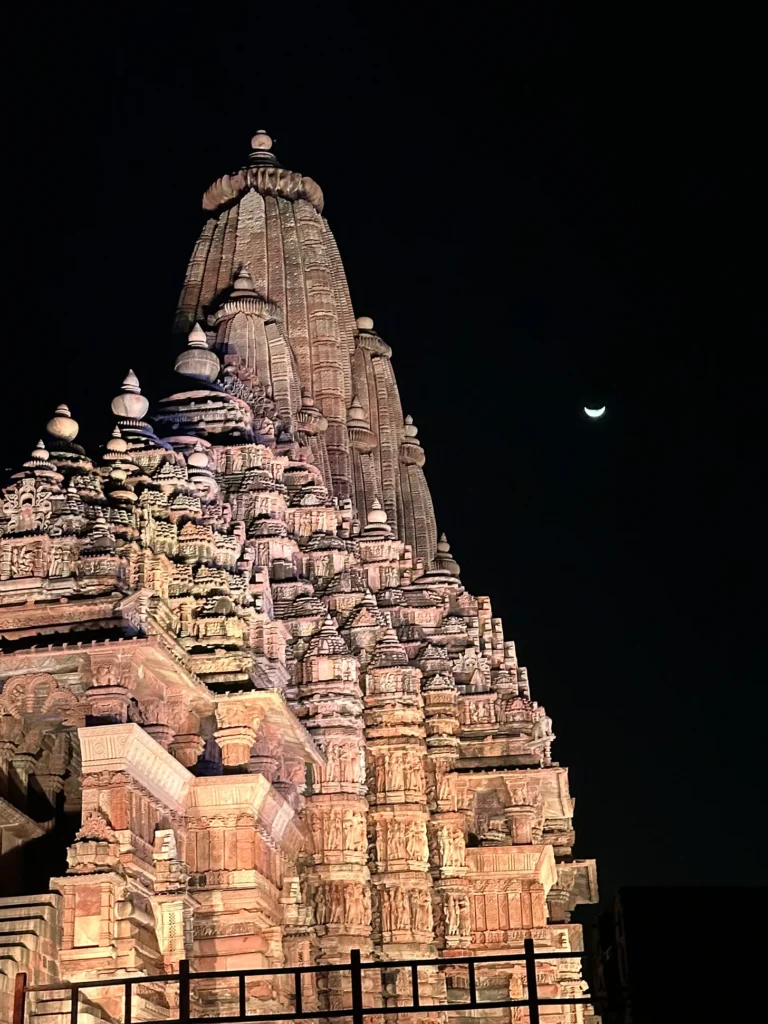
Khajuraho reminds us that history lives engraved as much in stone, as in the people, memories, and shared experiences that gather around it.
All photographs by the author. Courtesy Global Indian Artist (GIA).