
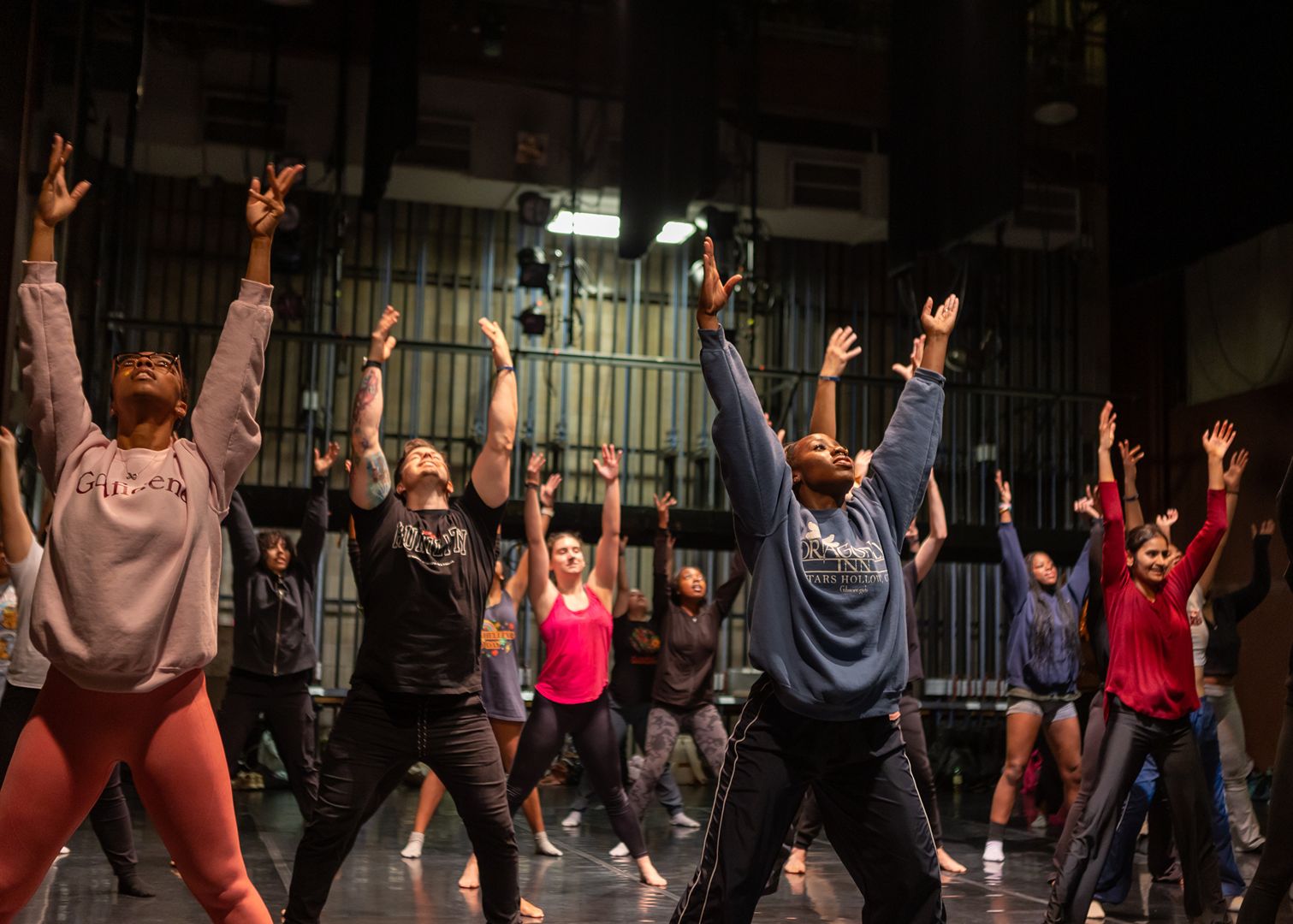
In this conversation, Global Indian Artist speaks with Mattie Fenton, Executive Director of the American College Dance Association (ACDA), at a moment when dance in higher education is undergoing sustained re-examination. Founded in 1971, ACDA has long functioned as a national platform for collegiate dance, offering students opportunities to perform, receive feedback, and encounter practices beyond the confines of their home institutions.
Our dialogue moves across ACDA’s evolving mandate, touching on questions of access, curriculum design, adjudication, and the changing needs of students entering an increasingly complex dance ecology. The conversation also reflects on the significance of hosting the 2026 New England Conference at The Dance Complexin Cambridge.
For the first time in its history, ACDA brings the conference off campus and into the city, positioning an active civic and community-based dance ecosystem as a site of learning. Taken together, these reflections offer a window into how one national organization is asking what it truly means to support dancers both within and beyond the university.
Conversation
Q: ACDA was founded in 1971, at a time when dance in higher education was still finding its footing. What do you think the organization was responding to then—and what does it need to address now?
Mattie: That’s such a good question, because it has shifted so much. I’d actually want to speak directly with people who were close to the original founders. But essentially, it began when dance faculty members came together and said: we need a national platform to recognize the excellence happening in performance and choreography in higher education. It was an opportunity for students and faculty to share their work outside our own academic setting and experience the diversity of what was happening in the national collegiate dance world.
As the dance field evolved over the years, the scope of the conference and festivals expanded to include a wide range of dance forms. These now encompass, but are not limited to, hip-hop, Irish dance, salsa, Caribbean and West African dance, stepping, and the integration of technology in dance.
Q: I’m particularly interested in why South Asian dancers often don’t access spaces like ACDA. Many of us form our own clusters and don’t always know how, or where, to enter broader national platforms.
Mattie: Over the last two years, that’s actually been a major initiative for us. I’ve been working closely with Kaustavi Sarkar, who is on our board of directors, to engage the South Asian and Indian dance community. Over the past two years, we invited artists from across the country to teach and perform at ACDA conferences, and it really took off.
The challenge is that ACDA is deeply student-focused with an emphasis on Institutional membership. Many of these professional artists didn’t come with students, and most of the South Asian student groups we engaged with weren’t tied to dance departments or dance majors. The question we’re still working on is how to create pathways for those students to join ACDA.
Q: ACDA has a long history, and The Dance Complex has its own strong legacy as a site of learning and community. What feels especially alive or relevant to you about bringing the New England conference here?
Mattie: This is a historic moment for ACDA. I took a risk on this conference because I loved everything about The Dance Complex—the artists, the teachers, the civic engagement. To be honest, ACDA had been operating in a bit of a bubble, and that’s not how the arts work.The Dance Complex tells the story ACDA wants to tell: that dance is part of a larger community. This conference is unlike anything we’ve done before. There are daily community discussions and civic engagement across the city, not just movement classes and performances inside the building. It aligns with where ACDA is headed.
Q: College dance curricula today sit at the intersection of technique, theory, identity, and social context. From ACDA’s vantage point, what shifts are you seeing—or encouraging—in how institutions design dance curricula for this moment?
From ACDA’s perspective, we’re seeing several institutions move beyond a one-size-fits-all model of dance training. Many programs are rethinking what “core” means, expanding technique requirements to better reflect the diversity of forms shaping the field today, while also placing greater emphasis on context, history, and lived experience.
There’s a growing recognition that students need tools not only to move well, but to think critically about why they move, whose traditions they’re engaging with, and how dance functions within social, cultural, and political frameworks. We’re also seeing more programs integrate creative research, interdisciplinary collaboration, and technology as essential parts of the curriculum.
Overall, the shift is toward preparing students to be adaptable
Q: Feedback can be both affirming and destabilizing for young dancers. How does ACDA frame adjudication and response so that feedback becomes a learning tool rather than a measure of approval or ranking?
Mattie: Feedback is one of the main reasons people attend an ACDA conference. Our adjudicators go through a rigorous vetting process developed with our Equity and Justice Committee. They receive orientations on how to give feedback, how to speak across styles, and how to prioritize student safety.
At most conferences, adjudication is blind—the panel doesn’t know who choreographed the work, or whether it’s a student or faculty. That helps reduce, not eliminate, bias. Students are also provided with various resources prior to the conference to help prepare them for the feedback process.
Q: And this conference is doing something different?
Mattie: Yes. The Dance Complex wanted a community-based feedback model. After performances, there will be facilitated conversations where everyone can speak, and choreographers can ask their own questions. The intention was to move away from what can be perceived as a “top-down” model, in which adjudicators are the sole voices offering feedback, and instead create a space where everyone who shares is valued equally and no single perspective dominates the conversation.We use various adjudication and feedback models at our conferences and they can all work beautifully.
Q: In many South Asian families, dance is often encouraged only as a part-time pursuit. How is ACDA thinking about supporting dancers once they leave college?
Mattie: Supporting dancers beyond college is something ACDA thinks about very intentionally. While technique classes remain important, our conferences are designed to offer much more than what happens in the studio. We’re creating spaces for students to build professional skills, make meaningful connections, and begin to imagine sustainable futures in the field.
This year in particular, conferences include résumé and portfolio workshops, networking events, mentorship opportunities, and both mock and live auditions with dance organizations and agencies. These offerings help students understand the range of pathways available to them and connect directly with professionals who are working in the field now.
ACDA’s goal is to support dancers as whole artists and people, by giving them access, context, and community as they move from college into the next phase of their lives.
Q: How is ACDA addressing financial access for low-income students and under-resourced programs?
Mattie: That’s one of our biggest challenges, especially as arts funding and institutional budgets continue to shrink. We’ve created a fund that will allow underserved programs to become ACDA members at no cost, starting next year.
Conference-related expenses like travel and registration remain difficult, but expanding access is a central priority in our ongoing strategic planning.
Q: Where do you see ACDA heading nationally?
Mattie: We’re deep in strategic planning. The model that worked for 53 years may not work 10 years from now. This year, at every conference, we’re hosting community forums and asking hard questions about the future of dance and higher education. They’re not comfortable questions, but they’re necessary ones.
Conference Context
The ideas explored in this conversation are reflected in the range of classes and gatherings programmed at the 2026 American College Dance Association New England Conference. Together, they point to an expanded understanding of dance education as culturally grounded, socially situated, and globally informed.
Sample classes and events include:
- Afro Contemporary
- Haitian Folkloric
- Bollywood
- West African
- Flamenco Fundamentals
- Capoeira
- Samba & Afro-Brazilian
- Boston Area Arts Resources Meet and Greet
- How We Get Thru: Black Dance and Getting Free