

December 5–21, 2025 | Emerson Paramount Center, Boston
Now in its 55th season, Black Nativity, conceived by Langston Hughes and presented by the National Center of Afro-American Artists, continues to resonate as a deeply moving celebration of Black life, spirituality, and community. This year’s production offers a warm, inviting reimagining of the Nativity—rooted in music, movement, and storytelling.
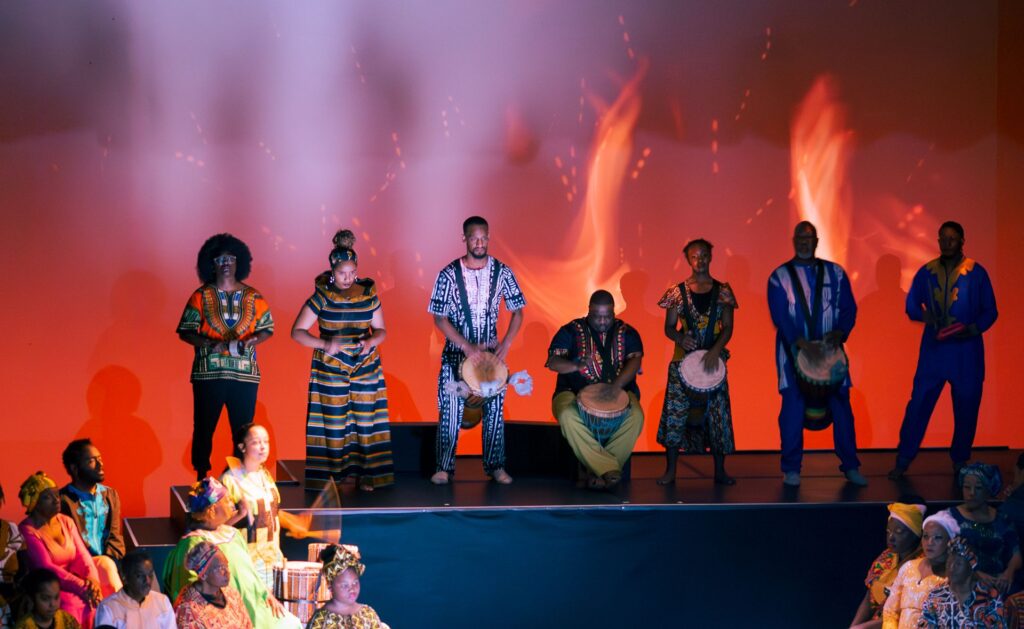
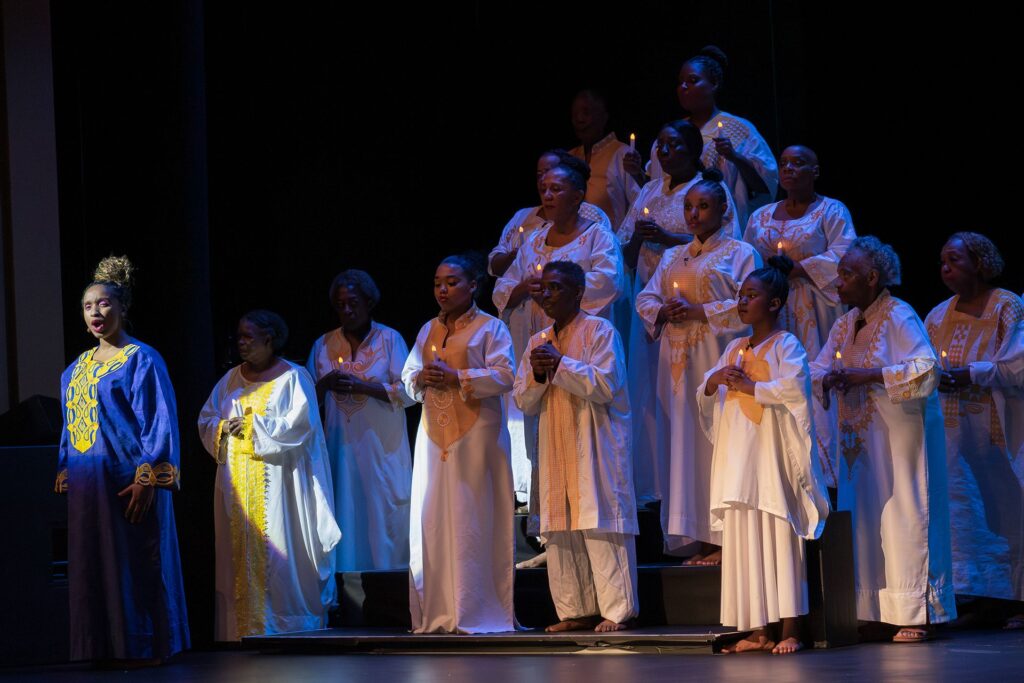
The evening opens with a candle-lit processional moving down the aisles, transforming the theatre into a shared ceremonial space. The church-like atmosphere is amplified by the rich vocals of both adult and children’s choirs, whose harmonies invite clapping, swaying, and collective participation. The soundscape is anchored by powerful African rhythms—driven by djun djun, djembe, and cabasa—that give the performance its rhythmic momentum.
One of the most affecting moments is Mary’s dynamic dance during the birth scene, capturing the vulnerability, strength, and surrender of childbirth. For the remainder of the performance, she maintains a calm, serene presence, inhabiting the role with quiet restraint. When the child is revealed in the cradle, the audience collectively gasps: the baby is real. The quiet presence of an actual infant—occasional stirrings and soft cries—renders Jesus profoundly human, grounding myth in lived reality.
What follows is a celebratory retelling of the Christmas story shaped through song, dance, rhythm, and movement. The only noticeable disruption comes in a brief technical mismatch, when Joseph’s knock at the door does not align precisely with the musical cue. It is a minor glitch in an otherwise assured and emotionally resonant performance.
As Akiba Abaka, Interim Executive Director of the National Center of Afro-American Artists, notes in the program, Boston’s long-running production of Black Nativity truly honors the artists who have shaped it across generations—what the Boston Black community has come to call its “Christmas card to the world.”