
Highlights
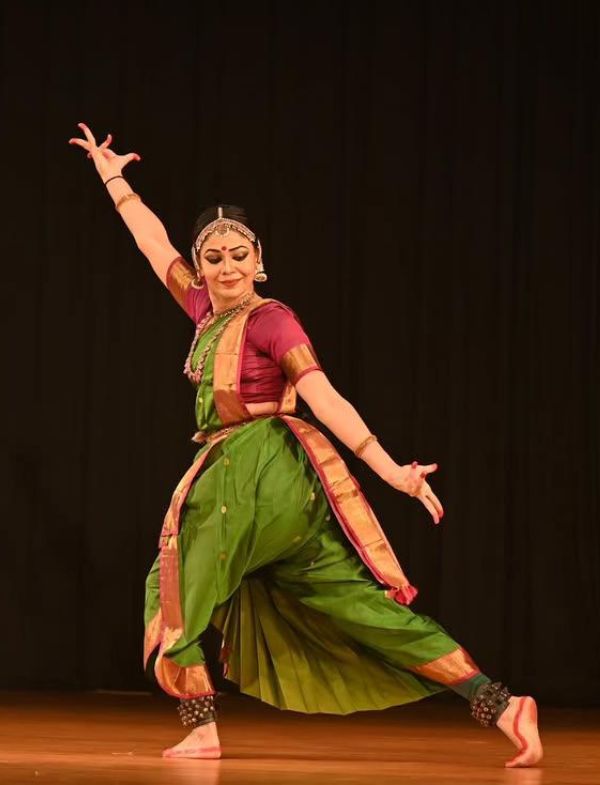
When research and personal exploration converge, sattvika bhava acquires a depth that moves beyond technique, offering the audience an experience of rasa. Navia Natarajan’s presentation at The Music Academy exemplified this much-needed synthesis—where scholarship, internalization, and restraint work in sensitive alignment.
The production was shaped by strong scholarly and musical support: textual guidance by Dr. Sudha Seshayyan (Aho Purushika) and lyrics, powerful in emotional resonance by Dr. Raghuraman (Bhishma), with music for both pieces composed by Raghuram Rajagopalan. The accompanying ensemble included D. V. Prasanna Kumar (nattuvangam), Raghuram Rajagopalan (vocal), Harsha Samaga (mridangam), Janardhan Srinath (violin), and Maheshswamy (flute).
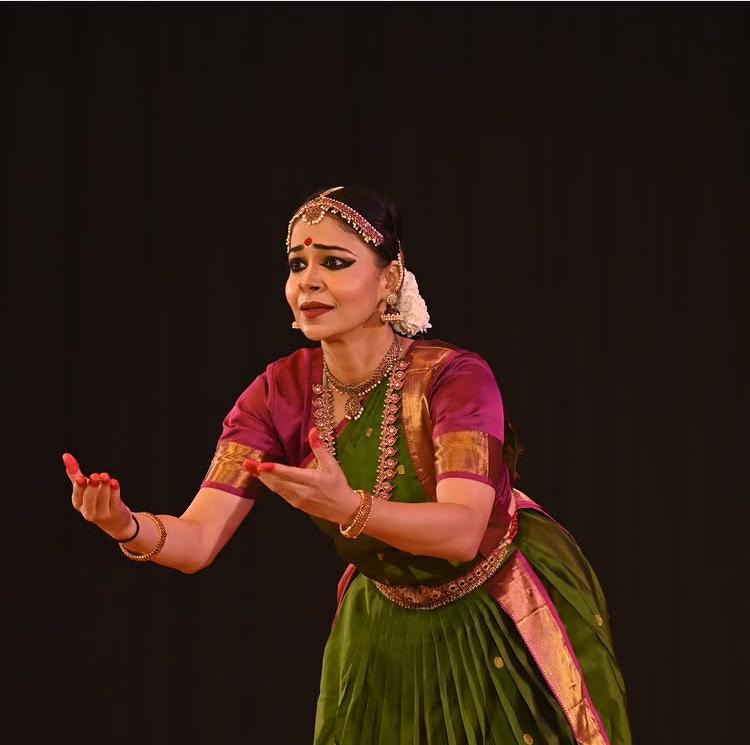
The evening opened with Aho Purushika, a salutation to the power of Parvati as Purushika. Drawing from the opening verse of Adi Shankaracharya’s Saundarya Lahari, the piece invoked the inseparable energies of Shiva and Shakti. Navia shaped vivid imagery—the parting of the Goddess’s hair filled with vermillion (kunkuma) glowing like the rising sun—drawing the audience into the play of divine illusion (maya). Her movements were assured, carrying the conviction of carefully chosen verses and a deep engagement with the revered text. Her abhinaya was clear, unhurried, and exact, allowing suggestion to do the work.
It was, however, in her portrayal of Bhishma that Navia’s command over sattvika abhinaya came fully into view. Beginning in an extended alidha mandala sthana, bow and arrow in hand, she assumed the stance of the legendary warrior—renowned for courage, wisdom, and unwavering resolve. Lighting by Sushan Jadav subtly heightened the emotional register. Gradually, the transformation unfolded: Bhishma receiving the force of the arrows with a faint smile, the body registering each piercing through restrained, precise jerks; arms opening wide, serenity resting on his face. Every gesture revealed Bhishma’s inner state, resonating with quiet intensity.
As Bhishma lies on his bed of arrows, Navia revisited the pivotal choices of his life and the responsibilities that followed. Episodes unfolded with judicious restraint: the Amba–Ambalika episode, his anguish at Draupadi’s humiliation, and the weight of vows once taken. Every episode unfolded through precise abhinaya, never overstated, allowing the sattvika response to surface organically—hands quivering, cheeks trembling, the entire body registering the anguish and clarity of a brave heart nearing release.In the final surrender to the Paramatman, Lord Vishnu, the choreography circled back to the beginning. Bhishma’s last fall—rendered through a deep backbend with arms extended—captured the stillness of an unparalleled warrior attaining peace. Silence played as vital a role as sound. It was a moment of profound quiet, where form dissolved into feeling, and sattvika abhinaya revealed its power.